Experiment 001
The five-line brief
Can a project brief fit on one screen and still be enough to build from?
Result
Five fields — problem, user, success, constraint, deadline — replaced a 12-page document on three projects with no loss.
We design, build and improve digital products for ambitious startups and businesses.
Most products do not fail because the code was wrong. They fail because nobody decided what the thing was for.
So we start there — then design it, build it, break it on purpose, and hand you something people can actually use.
Most teams come to us with one of five problems. We start wherever you actually are — not at step one because a process says so.

Turn uncertain ideas into clear product opportunities.
A product definition, user flows and a clickable prototype.
Between client work we build small things to answer a specific question. Each one below shows the question, the thing we made, and what it told us. Most experiments fail — the ones that hold end up inside client products.
Can a project brief fit on one screen and still be enough to build from?
Five fields — problem, user, success, constraint, deadline — replaced a 12-page document on three projects with no loss.
How far can a signup flow compress before it stops making sense?
Four. Deferring the profile until after first value cut drop-off by roughly a third.
Does a control that responds physically feel more reliable?
Testers rated the magnetic version 'more responsive' even though both fired in the same millisecond. This site uses it.
How much of a support inbox can be handled with no person in the loop?
About 60% — refunds, password resets and status checks — routed and resolved automatically. The rest still needs a human.
What if every primary action had to sit inside a thumb's reach?
Moving the pay button to the bottom bar made one-handed completion noticeably faster in testing.
Will people trust a dashboard more if it admits what it does not know?
Showing the confidence band instead of a clean line made people slower to decide — and right more often.
Fewer projects, shown properly. Each one is live, in use, and one click away.
Smart group payments.
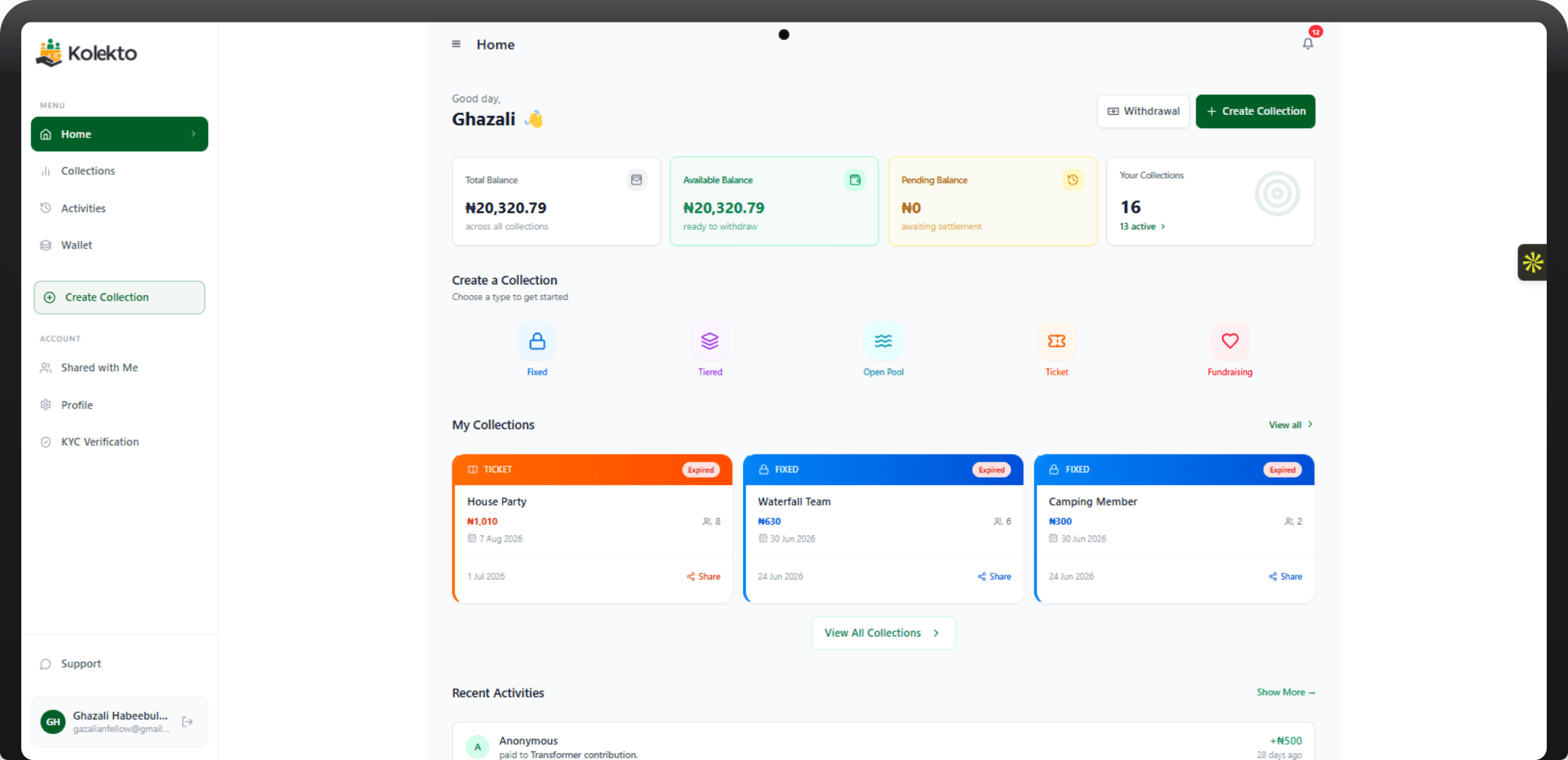
Group money in Nigeria runs on spreadsheets, WhatsApp threads and trust. Kolekto turns any shared collection — a fixed contribution, a tiered plan, an open pool, ticket sales, a fundraiser — into a link anyone can pay into, with the balance, the members and the settlement all in one place.
Organisers stopped chasing people for money. Contributions, wallet, withdrawals and KYC now sit behind a single dashboard.
A career, not just a course.
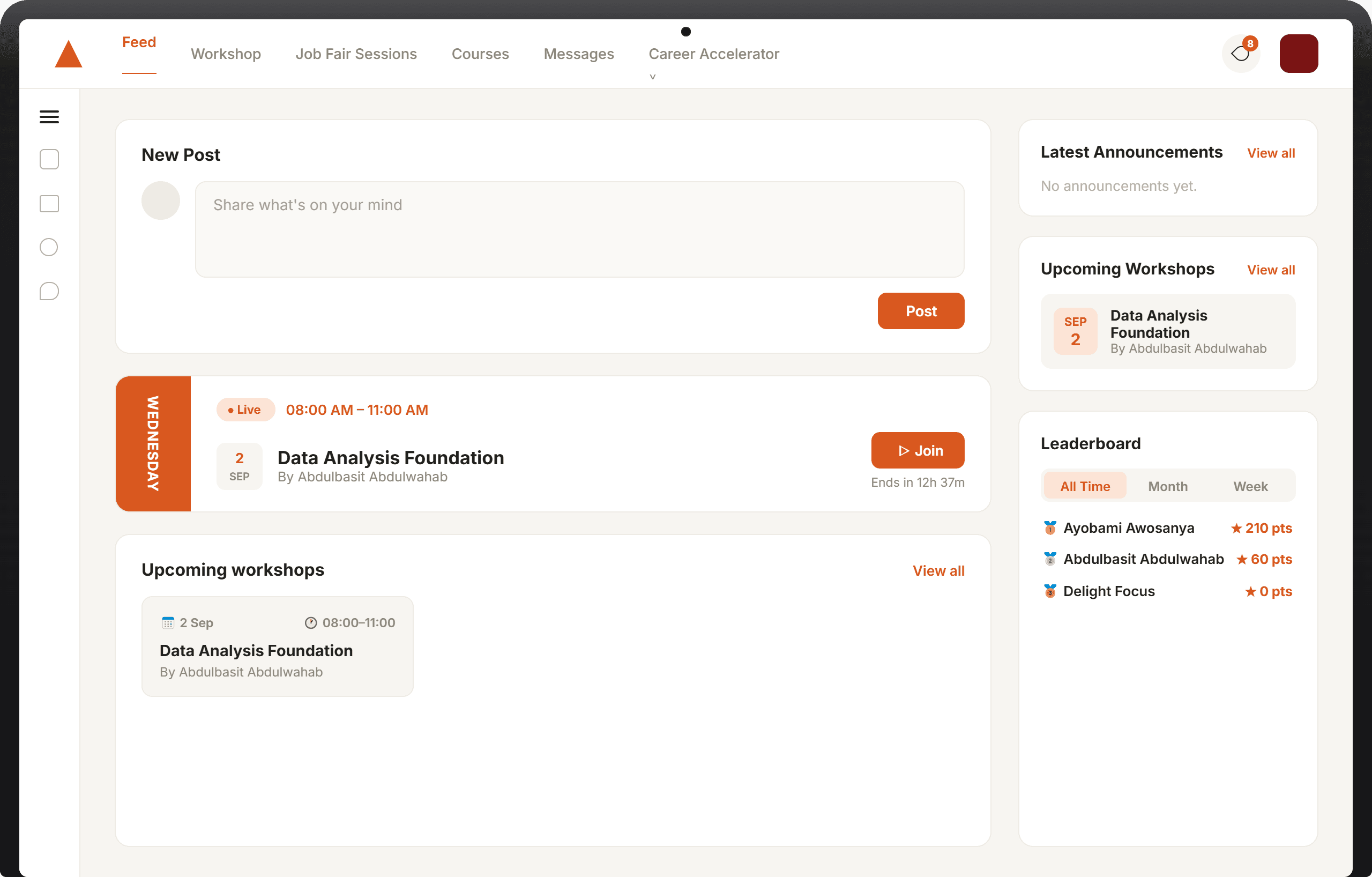
Ayonaire runs eight-week, instructor-led bootcamps across AI, Data, Software Engineering, Cyber Security, Cloud & DevOps, Digital Marketing and Product. The hard part was never the video — it was everything around it: live sessions, mentorship, cohort momentum, and the job hunt that follows.
One workspace holds the feed, live workshops, courses, messages and the Career Accelerator — so a learner never leaves to find the next step.
Quote it with your voice.
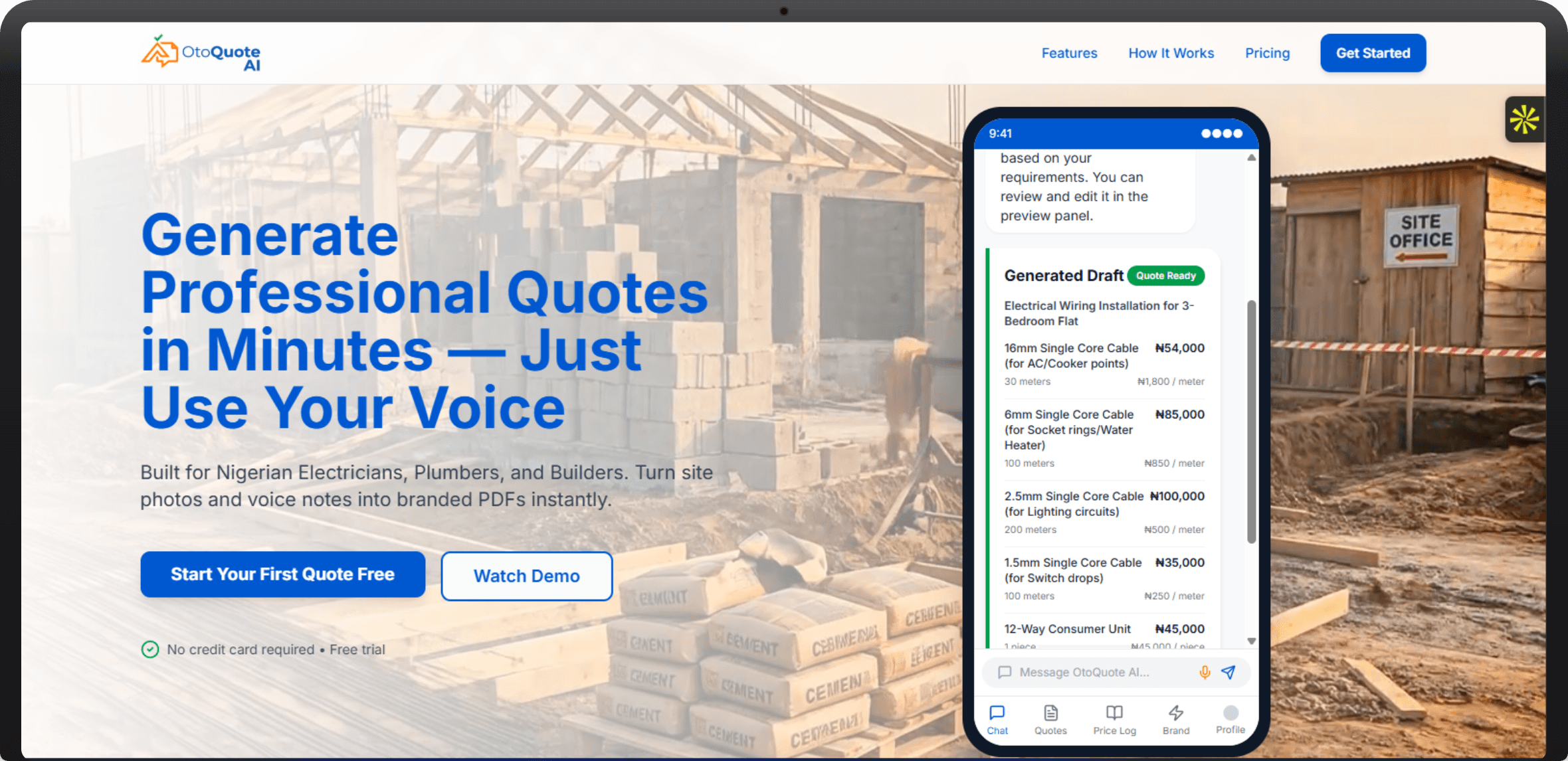
Nigerian electricians, plumbers and builders lose work to paperwork — a quote written by hand on site, typed up at midnight, sent two days late. OtoQuote turns site photos and a spoken description into a line-itemed, priced, branded PDF before the tradesperson leaves the job.
Minutes instead of evenings. Material lists, rates and totals are drafted automatically, then reviewed and edited in a preview panel before sending.
Zynda Labs is a product studio, not an outsourcing shop. The people who scope your product are the people who design and build it, and there is nobody in the middle translating between them.
We don't just deliver screens or code. We think about the actual product — what it is for, who needs it, and what happens after launch.
Modern tooling moves us from idea to working product in weeks, not quarters. Speed is a design constraint, not a compromise.
We experiment, test and challenge assumptions — including our own. Being wrong early is much cheaper than being wrong late.
The goal is not a beautiful prototype. The goal is something people can actually use.
Mostly from teams outside Nigeria, deciding whether to send the first email. If yours is not here, just ask.
Yes — most of our work is for teams outside the country. We are remote-first and run projects across Europe, North America and Africa. Everything is delivered in English, and we keep a fixed overlap window with your working day so there is always live time to talk.
We are on West Africa Time (UTC+1), which overlaps the full UK and European working day and the morning in North America. We schedule a standing overlap with whichever zone you are in, and async updates cover the rest.
It depends on scope, but as a guide: a Discover engagement starts around $5,000, an MVP build typically lands between $15,000 and $50,000, and ongoing Scale work is retained monthly. You get a written price and a date before anything starts — we do not bill by surprise.
Six to twelve weeks for most products, from first workshop to something in production. Discovery adds two to four weeks in front of that if the idea still needs shaping. You see working software every week, not a status report.
You do, completely, from the first commit. At handover you get the repository, the design files, the design system and the documentation — whether we keep working together or not. No licensing, no lock-in, no hosting we control.
Often, yes. We start with a Verify engagement — a read of the code, the security posture and the user experience — and give you a ranked findings report. From there we either fix it or tell you honestly that a rebuild is cheaper.
Yes, routinely, and we can sign yours before the first call. If you would rather use ours, ask and we will send it over.
Mostly TypeScript across the stack — React and Next.js on the web, React Native for mobile, Node and Postgres behind them. We choose boring, well-supported tools on purpose, so the next team can pick the product up without a translation layer.
Send us the project form or an email. We reply within one working day, usually with questions. Then a short call, then a written plan with a price and a date. No pitch deck, no procurement dance.
We occasionally open applications for founders and builders with promising startup ideas. Selected teams enter a short, intense product-building program.